
The ensemble
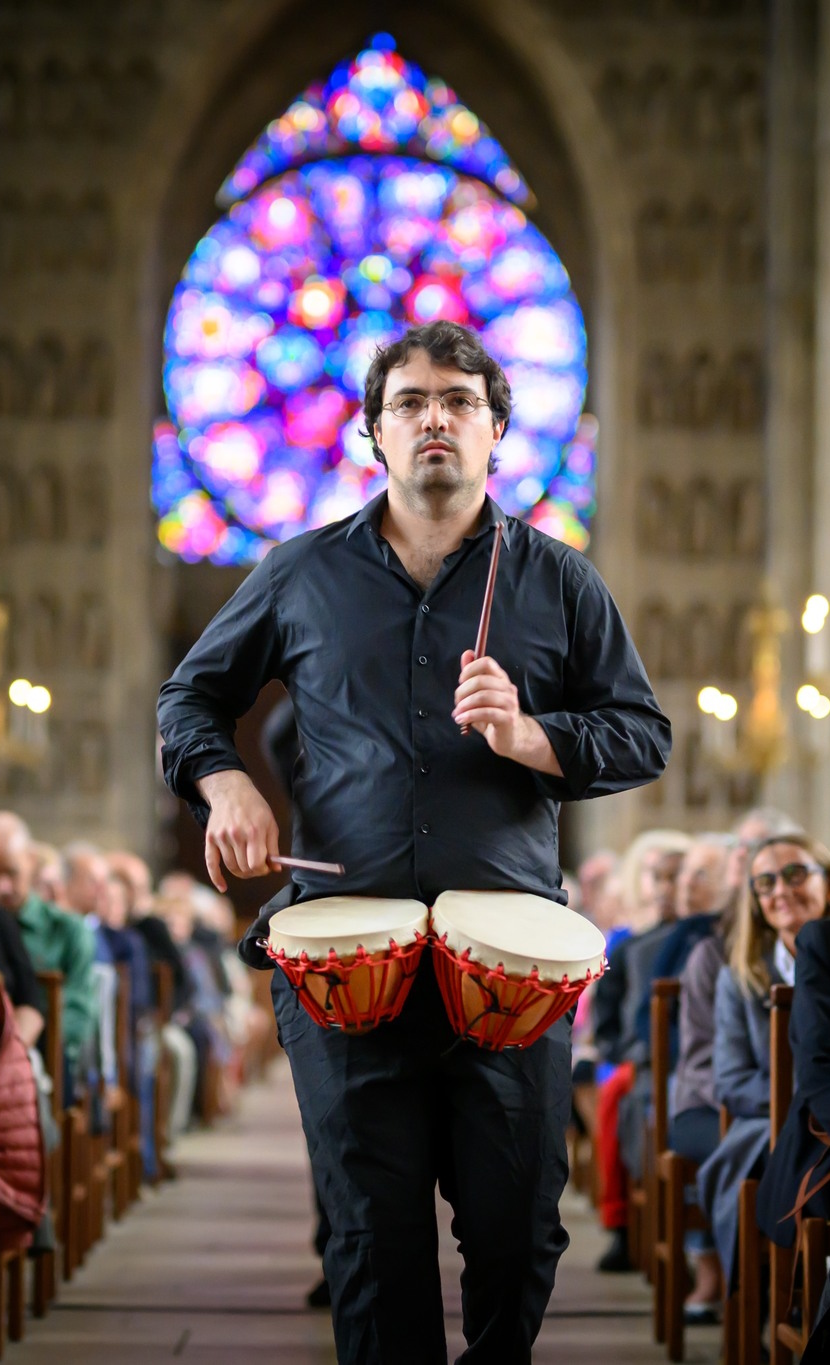
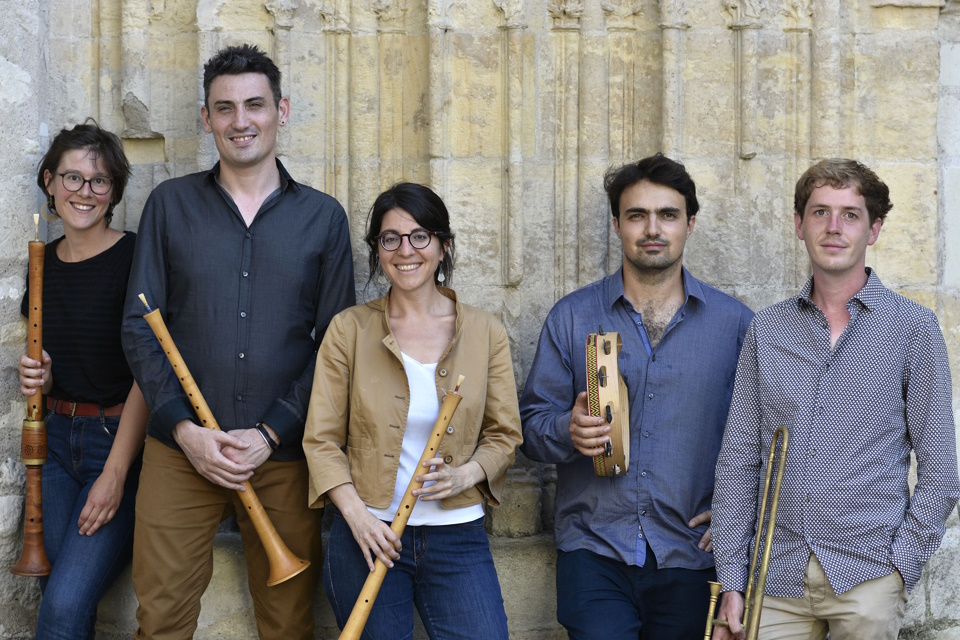
Into the Winds is a powerful, striking and rare sound: that of the wind instruments of the Middle Ages and the Renaissance, whose invigorating breath opens the way to journeys, bridges and passages… Founded in 2017 around five young multi-instrumentalists, the ensemble’s mission is to share the sacred and secular repertoire of the late Middle Ages and early Renaissance through original and innovative concerts.
Winner of the 2019 Van Wassenaer competition organised by the Utrecht Early Music Festival and selected as a recipient of funding for new European ensembles by EEEMERGING+, Into the Winds has performed in numerous festivals across France and abroad such as Festival d’Ambronay, Festival de Saintes, Flâneries Musicales de Reims, Sinfonia en Périgord, Valloire Baroque, Baroque en Tarentaise, Musique Baroque du Jura, Promenades Musicales en Pays d’Auge, Les Intemporel-les, Musiques Anciennes de la Réole, Vochora, Oude Muziek (Utrecht), MA Festival (Bruges), Felix! Festival (Cologne), La Cité Bleue (Geneva), La Folia (Rougemont) and Innsbrucker Abendmusik, among others.
Into the Winds’ shawms, sackbuts, trumpets, recorders and many percussion instruments have resounded not only within famed concert halls but equally on contemporary music stages, in the winding alleyways of medieval villages, on ancient battlefields, and even upon the ramparts of fortified castles. While balancing their instrumental mastery with the energy and groove of a big band, the musicians are committed to sharing the joy of their music-making with others.
In 2023, Into the Winds released its first album, Le Parfaict Danser, devoted to the earliest notated dances from the 13th to the 15th century. The recording received unanimous praise from both audiences and the specialised press. In 2025, the ensemble released its second album, Le Grand Embrasement, a musical journey into the turbulent reign of King Charles VI that highlights numerous lesser-known composers from the early 15th century. The album was awarded a Diapason d’Or in December 2025.
Our approach
Co-founded in 2017 by Adrien Reboisson and Anabelle Guibeaud and now consisting of five early wind instrument specialists, the ensemble Into the Winds aims to introduce sacred and secular musical repertoire from the Middle Ages through the early Renaissance to as wide an audience as possible.
The ensemble makes use of rare or forgotten instruments – recorders, precursors to the oboe (such as shawms), Renaissance bassoons (dulcians), early brass (buisines, natural or slide trumpets, sackbuts), and historical percussion – and is passionately dedicated to their rediscovery. Seeking to align historically informed performance practice with musicological research as well as with creative and innovative programming, Into the Winds offers memorable, immersive experiences built around profound and universal themes.
From the very beginning, the ensemble has collaborated with artisanal and specialised historical instrument makers; access to a large range of instruments which provide a multitude of sounds and timbres is essential in reflecting the diversity of what was heard in Europe during the 15th century. Thanks to ongoing research and recent discoveries of new (old!) sources and transcriptions, Into the Winds has compiled a rich repertoire that can transport listeners to other vibrant and varied states: intimacy or extravagance, tumult or peace, festivities or moments of contemplation.
From the gothic sounds of trumpets filling the first cathedrals to the troubadour songs exalting courtly love, from the brilliant shawms enlivening balls and feasts to the nonchalant virtuosity of tabors and recorders improvising within princely estates, Into the Winds aspires to share the rich and diverse musical aesthetics of the era with its audiences.
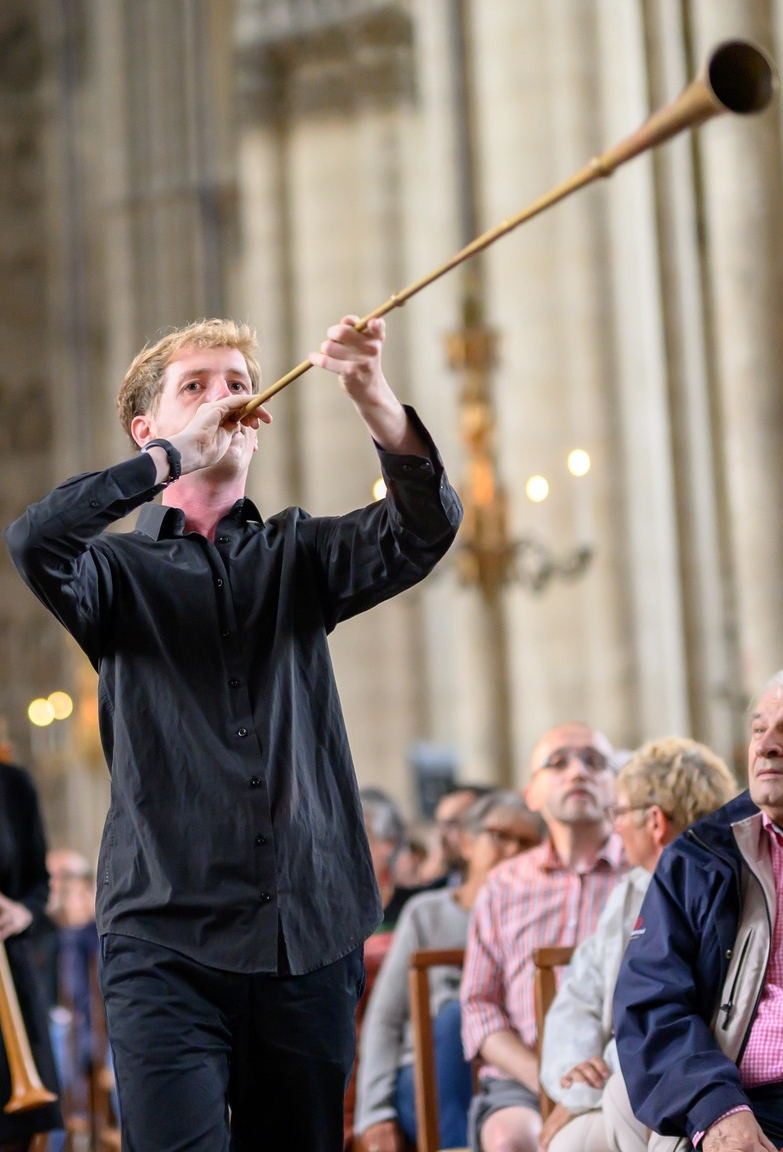
Formats and productions
Driven by the desire to share the epic breath of our instruments with as many people as possible, our work takes many forms. Whether through concerts, recordings, immersive musical experiences or outreach and educational projects, each of our initiatives reflects our wish to make early music resonate in today’s world.
Milestones

Into the Winds joins REMA (European Early Music Network)
In 2026, Into the Winds becomes a member of REMA, an initiative dedicated to promoting Early Music and enhancing its visibility across Europe.
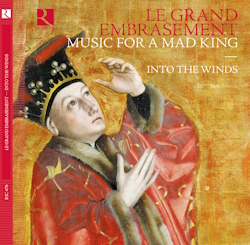
Into the Winds releases its second album, “Le Grand Embrasement • Music for a Mad King”
On October 31, 2025, Into the Winds released its second album, Music for a Mad King. This recording explores the musical world of the reign of Charles VI, the “mad king”, shedding light on many little-known composers from the early 15th century. It was awarded a Diapason d’Or in December 2025.
Into the Winds joins FEVIS
Into the Winds joined the Fédération des ensembles vocaux et instrumentaux spécialisés (FEVIS).
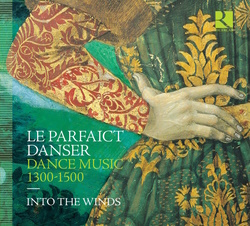
Into the Winds releases its first album, "Le Parfaict Danser"
On May 12, 2023, Into the Winds released its first album "Le Parfaict Danser". This recording explores the earliest notated dances of the 13th to 15th centuries, the songs and pieces that were often their sources, as well as the more refined compositions that used them for inspiration.
Into the Winds receives funding from the Caisse des Dépôts Group
In June 2022, Into the Winds received funding from the Caisse des Dépôts Group, which supports the development of young ensembles and promotes access to music for all.
Into the Winds joins the EEEMerging+ programme for young European ensembles
In November 2019, Into the Winds gained admission to the European "Eeemerging+" programme coordinated in France by the Centre Culturel de rencontre d'Ambronay.
Into the Winds wins the Utrecht festival's international competition
In September 2019, Into the Winds took part in the Van Wassenaer international competition organised as part of the Utrecht Early Music Festival, one of Europe's most renowned early music festivals, and was awarded the jury prize, the Radio AVROTROS prize, and a tour of the Netherlands in 2021.
Artistic direction
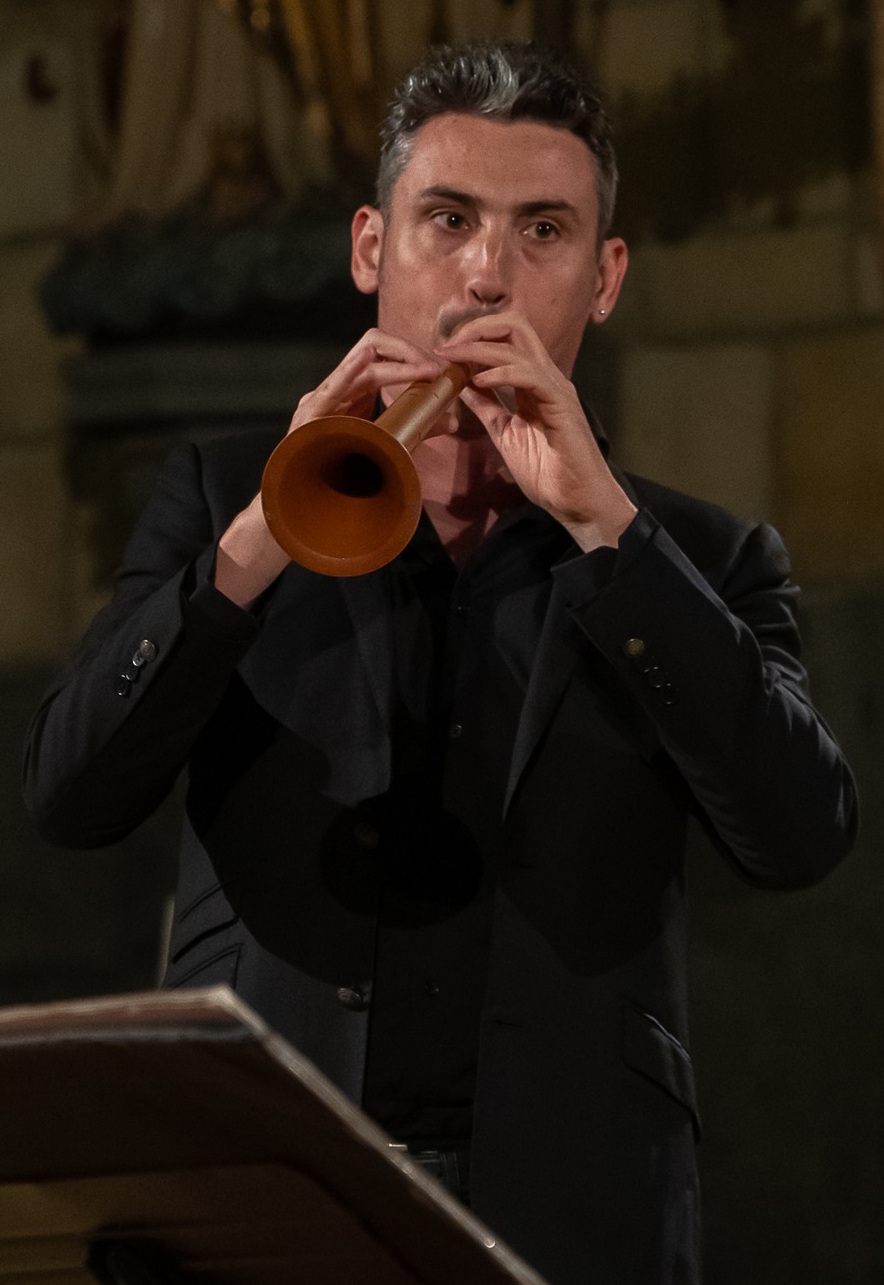
Adrien Reboisson
Adrien Reboisson took an unconventional path into music, discovering early music and dance while studying engineering. He went on to study the recorder with Carine Moretton and Denis Raisin Dadre, Renaissance double reeds with Jérémie Papasergio, Michèle Vandenbroucque and Ian Harrison, and Baroque oboe with Elsa Frank and Jean-Marc Philippe. He also studied historical dance and its relationship with music under the guidance of Robin Joly.
In 2017, he co-founded Into the Winds with Anabelle Guibeaud, with the aim of introducing audiences to the sacred and secular music of the late Middle Ages and early Renaissance through distinctive, immersive musical narratives. Now the ensemble’s sole artistic director, he devises programmes that place each work within the historical, political and social contexts from which it emerged.
His interest in historical oboes has led him to work closely with instrument makers, contribute to reconstruction projects and conduct experimental research into historical reeds. Bringing together performance, research and education, he seeks to reveal the vitality and evocative power of music that remains largely unfamiliar to modern audiences.
He also performs with a number of early music groups, including Ensemble Doulce Mémoire, Sollazzo Ensemble, Ensemble Le Banquet du Roy, Compagnie Outre Mesure, Le Poème Harmonique and Ensemble Correspondances. As a dance master, he leads numerous balls, workshops and masterclasses devoted to Renaissance dance.
The musicians
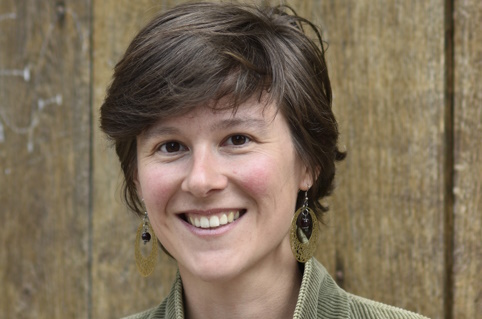
Marion Le Moal: Shawms, recorders, dulcians
Marion Le Moal discovered the field of early music via her recorder training, and was quickly captivated by the music and particularly the wind instruments of the Renaissance period. After completing her recorder degree at the Conservatoire de Tours with Denis Raisin-Dadre, she pursued her studies in the Netherlands at the Utrecht Conservatorium, in addition to the Pôle Supérieur de Musique in Poitiers with Claire Michon. Her interest in early double reed instruments flourished thanks to the guidance of Jérémie Papasergio and Ian Harrison, and she studied the baroque oboe with Elsa Frank and Antoine Torunczyk. She teaches recorder at the Conservatoire de Boulogne-Billancourt and performs regularly with early music groups such as Ensemble Consonance, Eolus, Les Musiciens de Saint-Julien, and Le Concert Spirituel.
Julián Rincón: Shawms, recorders, dulcians
Julián Rincón is a musician deeply passionate about European early music and the musical traditions of Latin America. Originally from Cali, Colombia, he performs on a wide range of wind instruments, including recorder, historical oboes and bassoons, as well as the quena, siku, and Colombian gaitas. He studied at the conservatory with David Gómez García, and later with Sébastien Marq and Denis Raisin-Dadre (recorders), as well as Jérémie Papasergio (double reeds). He has developed a particular interest in double-reed instruments. His research project La route de la chirimía (Master MIMA, Sorbonne, 2017–2021), devoted to the circulation of these instruments between Europe and Latin America, further deepened this specialisation. He collaborates with several early music ensembles, including Marguerite Louise, Le Poème Harmonique, and Alkymia. He currently teaches recorder at the CRR of Boulogne-Billancourt, where he also introduces students to historical oboes and bassoons.

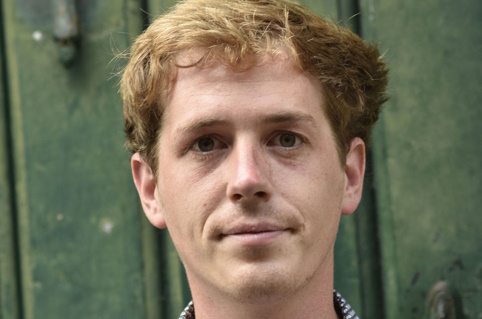
Rémi Lécorché: Sackbut, Slide trumpet, buisine, recorders
Multi-talented Rémi Lécorché performs on a number of different instruments, including the sackbut, recorders, euphonium, serpent and slide-trumpet. He began his musical education in Montargis and went on to study at the Conservatoire de Tours, Conservatoire de Saint-Maur-des-Fossés, as well as the CNSM de Lyon. He performs regularly in France and abroad with various ensembles such as Doulce Mémoire, Pygmalion, Tasto Solo, Marguerite Louise, Mensa Sonora, Daedalus, Les Trucking Sisters, Les Coccigrues, Consonance, Les Cris de Paris, L’Acheron, Sollazzo Ensemble, Concerto Soave, and La Compagnie de la Tempête.
Laurent Sauron: Percussion
The percussionist Laurent Sauron received classical training at the Pôle Supérieur de Musique in Aubervilliers, where he was awarded the DNSPM, Diplôme d’Etat, and Licence de Musicologie. At the same time he studied the harpsichord, earning diplomas in performance and in basso continuo. In addition, he gained further experience in early percussion through orchestral courses, including the Académie du Périgord Noir, and the Orchestre Français des Jeunes Baroque. He plays regularly with La Cappella Mediterranea, Les Talents Lyriques, Le Concert Spirituel, B'Rock, Il Festino, Ensemble Clematis and Les Arts Florissants.
Support us
If you appreciate our work, please don't hesitate to support us so that we can better defend a repertoire and composers that are rarely represented on today's music scene.