
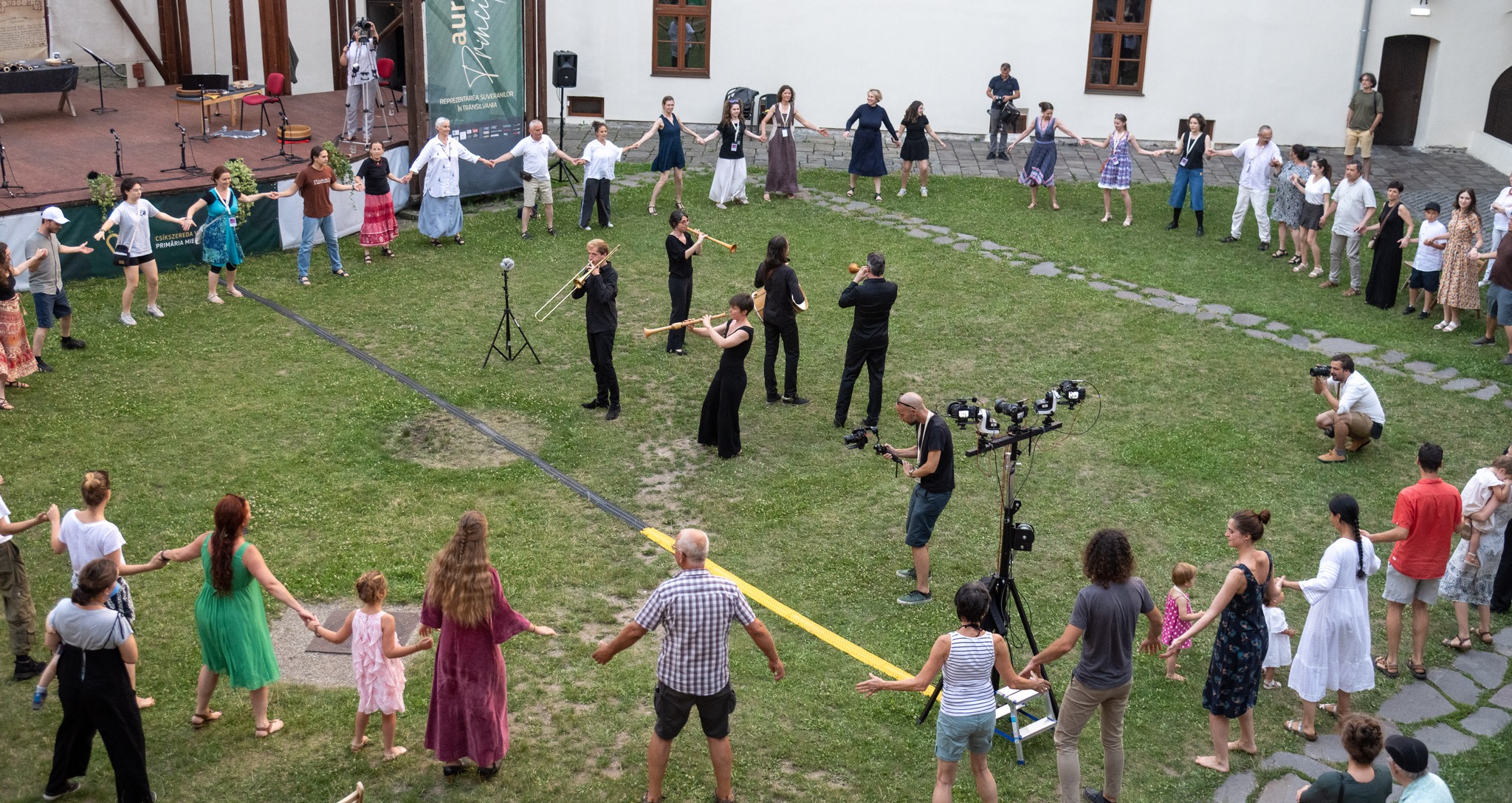
The Grand Ball is a unique opportunity to bring a vast choreographic and musical heritage back to life by experiencing it directly, joyfully and collectively. Open to all, it is a festive moment where one learns by dancing, gaining a first-hand sense of what music, movement, and the group can create together. It also offers an original and unifying format for venues wishing to present a participatory experience that turns the audience into active contributors to history.
In the sixteenth century, dance stood at the heart of European social life. The historian Margaret McGowan even describes it as a “French obsession,” given the abundance of accounts of balls, festivities, and ballets at court. Yet far from political strategy and grand royal spectacles, dance remained above all a shared practice, rooted in every layer of society — one whose basic steps any well-educated gentleman was expected to master. A ball was, first and foremost, a moment of encounter and exchange through collective dances that brought participants together across generations.
Thanks to an exceptional treatise written around 1590 by the canon of Langres Thoinot Arbeau, the Orchesography, we still possess today the music and precise choreographies of the earliest recorded dances. They are not reserved for specialists: they are simple, playful, vibrant, and offer a direct way to connect with the imagination of the Renaissance.
No dance experience required! The ball is led by a dance master who demonstrates the steps and guides the participants. Majestic pavanes, bransles inspired by trades or everyday gestures, from the Washerwomen to the Horses branles via the Sabots or the War branles, allow each person to be carried by the collective energy and rediscover the pleasure of a shared pulse.
Whether in jeans and trainers or in costume, the Renaissance Ball we offer is above all a moment of learning and shared joy, an experience we are committed to reintegrating into the world of today.
The Grand Ball may be presented as a standalone event, as a companion to the concert Le Parfaict Danser, or as the culmination of an educational project developed with a school, arts institution, or conservatory.